
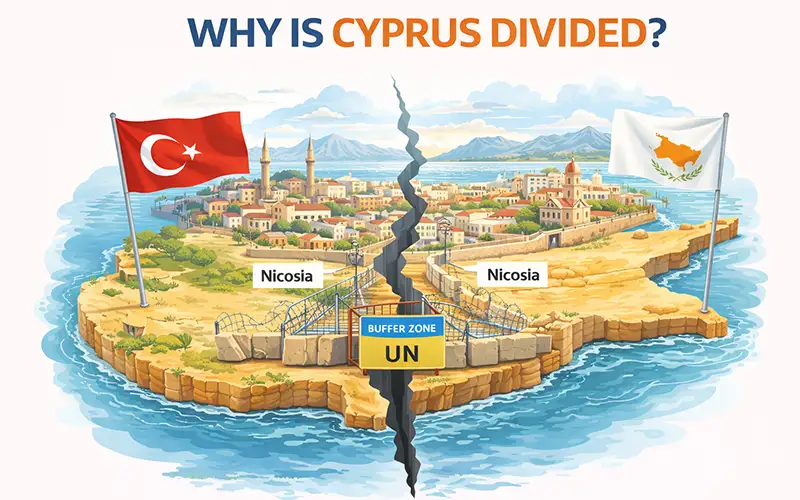
The question Why is Cyprus Divided is one of the most frequently asked topics by visitors, expats, and anyone interested in the Eastern Mediterranean. Cyprus is a small island with a complex history shaped by empires, colonial rule, ethnic tensions, and international politics. Understanding why Cyprus is divided requires looking at historical events, political decisions, and unresolved conflicts that continue to influence the island today.
This article provides a clear and structured explanation of why Cyprus is divided, from ancient times to the modern political reality.
Historical Background of Cyprus
To fully understand why Cyprus is divided, it is important to begin with the island’s long history. Cyprus has been ruled by many powers, including the Romans, Byzantines, Venetians, Ottomans, and the British. Each period left cultural, religious, and political influences on the island.
Under Ottoman rule, which began in 1571, two main communities developed: Greek Cypriots, who were mostly Orthodox Christian, and Turkish Cypriots, who were mostly Muslim. These communities lived side by side for centuries, generally with limited conflict, but they maintained distinct identities.
British Rule and Rising Nationalism
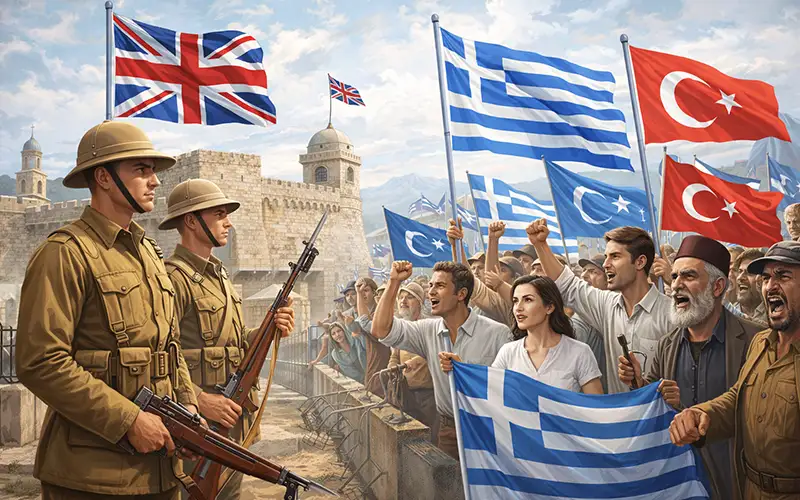
The modern roots of Why Cyprus is divided began during British rule, which started in 1878. During this period, nationalist movements grew among both communities.
Greek Cypriots increasingly supported Enosis, the idea of uniting Cyprus with Greece. Turkish Cypriots, fearing marginalization, supported either continued British rule or Taksim, the partition of the island.
These opposing goals planted the seeds of division and are central to understanding why Cyprus is divided today.
Independence and the 1960 Constitution
Cyprus became an independent republic in 1960. The new constitution attempted to balance power between Greek Cypriots and Turkish Cypriots. Government roles were divided by ethnicity, and both communities were guaranteed political representation.
However, the system was fragile. Disagreements over governance quickly emerged, and cooperation broke down. This instability is a key reason why Cyprus is divided, as it led to increasing mistrust and political paralysis.
Intercommunal Violence in the 1960s
Between 1963 and 1967, intercommunal violence erupted across the island. Greek Cypriot and Turkish Cypriot communities clashed, leading to deaths, displacement, and the creation of enclaves.
Turkish Cypriots withdrew from the central government, and the island effectively became divided into separate areas. This period is a critical chapter in explaining why Cyprus is divided, as it marked the breakdown of shared governance.
The 1974 Coup and Turkish Intervention
The most decisive moment in answering why Cyprus is divided occurred in 1974. A coup backed by the Greek military junta aimed to unite Cyprus with Greece. In response, Turkey launched a military intervention, citing its role as a guarantor power under the 1960 agreements.
Turkish forces took control of the northern part of the island, while Greek Cypriots fled south and Turkish Cypriots moved north. This event physically divided Cyprus along what later became known as the Green Line.
The Green Line and UN Involvement
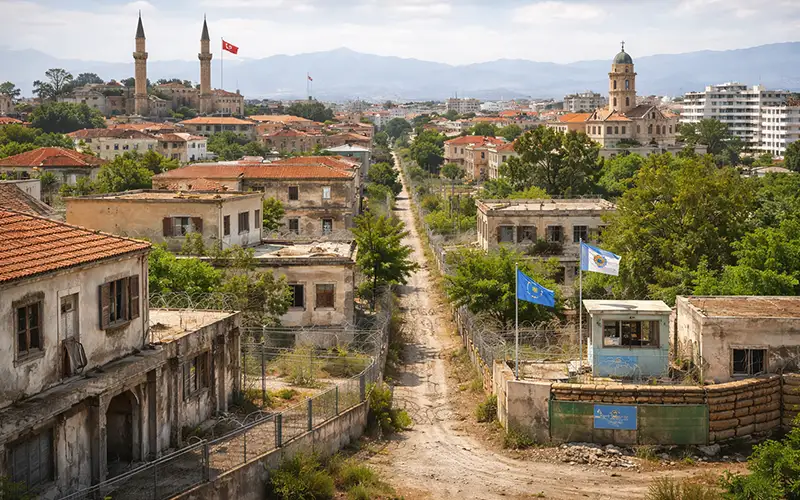
After 1974, a buffer zone was established by the United Nations to prevent further conflict. This zone, known as the Green Line, runs across the island and through the capital city, Nicosia.
The existence of this buffer zone is a visible reminder of why Cyprus is divided and how international organizations have played a role in maintaining peace without resolving the underlying dispute.
The Declaration of Northern Cyprus
In 1983, the Turkish Cypriot administration declared the Turkish Republic of Northern Cyprus (TRNC). This state is recognized only by Turkey. The southern part of the island remains the internationally recognized Republic of Cyprus.
This political separation is another key reason why Cyprus is divided, as it solidified the division into two separate administrations.
Failed Reunification Efforts
Over the decades, numerous attempts have been made to reunify Cyprus. One of the most significant was the Annan Plan in 2004, which proposed a federal solution. Turkish Cypriots voted in favor, while Greek Cypriots rejected it.
The failure of reunification efforts explains why Cyprus is divided even today, despite widespread international support for a solution.
Cyprus and the European Union
In 2004, the Republic of Cyprus joined the European Union. However, EU laws are suspended in the northern part of the island. This created economic and political differences between the two sides.
EU membership has added another layer to the question of why Cyprus is divided, as it complicates negotiations and legal frameworks for reunification.
Daily Life in a Divided Cyprus
Despite political division, everyday life on the island is relatively peaceful. Crossings between north and south have been open since 2003, allowing people to travel, work, and visit family across the divide.
This coexistence shows that while Cyprus is divided politically, social interaction continues, adding nuance to the question why Cyprus is divided but not constantly in conflict.
International Perspectives on the Division
The United Nations, European Union, Greece, Turkey, and the United Kingdom all play roles in discussions about Cyprus. Conflicting interests and regional politics make resolving the issue difficult.
These external influences are an important part of understanding why Cyprus is divided and why a solution has been so elusive.
Why Cyprus Remains Divided Today
So, why is Cyprus divided after decades of negotiations? The answer lies in a combination of historical grievances, security concerns, political distrust, and unresolved questions about governance, property rights, and power-sharing.
Both communities have different visions for the future, and bridging these differences remains challenging.
Is Reunification Possible?
While many Cypriots support reunification, progress has been slow. Confidence-building measures, economic cooperation, and dialogue continue, but no final agreement has been reached.
The future of the island remains uncertain, which keeps the question why Cyprus is divided relevant for new generations.
Conclusion
Why is Cyprus Divided is a question rooted in history, identity, and geopolitics. From colonial rule and nationalist movements to the events of 1974 and ongoing political challenges, the division of Cyprus is the result of complex and interconnected factors. Understanding this history helps explain the current reality of the island and provides context for ongoing peace efforts.
For those interested in living, investing, or understanding the social and political landscape of Cyprus, Luxury Life offers valuable insights into both the historical background and modern realities of life on the island.